
"Arabica growth"
5000 article(s) found

Coffee tree growing environment and species introduction
The environmental conditions suitable for the growth of Arabica coffee trees are that the annual temperature changes between 15 and 25; the annual rainfall is between 1500 and 2000 mm, and it must be able to match the flowering period of coffee trees. In addition, the growth of coffee trees for soil requirements are also very high, if the soil is not fertile enough, containing nutrients, including a variety of trace elements are not enough, it may affect

Flavor and taste characteristics of robusta coffee varieties growth and environment of robusta coffee beans
Following caf é (Wechat official account vdailycom) found that Arabica Coffee beans grow at colder high elevations in the tropics, while high temperatures and low elevations, which are not suitable for Arabica varieties, are home to Robusta. Robusta grows in lowlands 200-600 meters above sea level. He likes a warm climate and requires a temperature of

The growth experience of coffee
Coffee seedlings do not blossom until about 5 years. Coffee begins to wither after flowering for 2-3 days. Green fruit gradually turns yellow after a few months. In June-September, it begins to turn red. There are roughly three varieties of coffee grown on a large scale: Arabica, also known as Arabica, which accounts for about 70% of the world's coffee acreage. The bean shape is slender, with an S-shaped line in the middle, and is native to

Characteristics of growth process in Arabica Coffee planting area
Professional coffee knowledge exchange more coffee bean information please follow the coffee workshop (Wechat official account cafe_style) Coffee tree is a genus of Rubiaceae in botany. The classification of coffee trees is very complex, there are many species, diversity and varieties. Different varieties of coffee beans have different tastes, but even for the same variety of coffee trees, due to different soils and different gases

A brief introduction to the growth, environmental characteristics and development status of Robusta
Following Kaiping (Wechat official account vdailycom) found that Beautiful Cafe opened a small shop of its own Robusta species (scientific name Coffee Robusta Linden), one of the most important coffee tree varieties in the world. It is a leaf rust resistant variety found in Congo, Africa, and has stronger disease resistance than Arabica. Introduction: in the general coffee market, many people like to put Robbs

Arabica Coffee growing conditions Arabica Coffee is grown at high altitude
Professional coffee knowledge exchange more coffee bean information please pay attention to the coffee workshop (Wechat official account cafe_style) there are tens of thousands of coffee species around the world, many Arabica coffee varieties are gradually emerging to say hello to you, and hope that while tasting coffee, we can understand where "coffee" comes from, what benefits it brings into our bodies, and how to brew it.
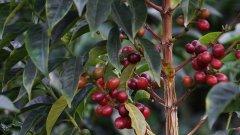
Types and characteristics of Coffee trees knowledge about Coffee trees
A single coffee tree but in places where coffee is artificially planted, people cut off the branches at the top of the coffee tree when it grows to three meters high, so that the coffee tree does not grow too high, so that it can be picked during harvest. According to the botanical classification, the coffee tree belongs to the domain: eukaryotic domain, Eukaryote kingdom: plant kingdom, Plantae phylum: angiosperm phylum, Magnoliophyta class.
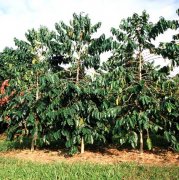
Coffee beans and coffee trees types of coffee trees
In general, coffee trees can grow to 4-5 meters high, and even 9-10 meters high. A single coffee tree but in places where coffee is artificially planted, people cut off the branches at the top of the coffee tree when it grows to three meters high, so that the coffee tree does not grow too high, so that it can be picked during harvest. According to the botanical classification, the coffee tree belongs to the domain: eukaryotic domain, Eukaryote realm:
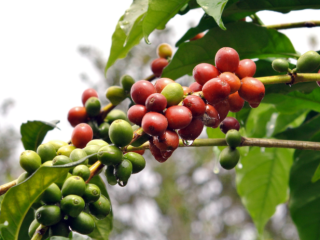
What kind of plant does coffee tree belong to? Introduction of coffee bean varieties and growth and fruiting cycle of coffee trees.
Coffee trees belong to the angiosperm phylum, dicotyledonous class, Rubia. Growing in the tropics and subtropics, coffee trees have white tube-shaped flowers that look like jasmine and give off the fragrance of jasmine. The flowers withered after 2 to 3 days, and the coffee beans began to bear fruit for 3 to 5 years after sowing.

The growth of Kenyan Coffee out of Africa
The highest temperature of the year is 22: 26 ℃ and the lowest is 10: 14 ℃. These conditions are very suitable for the excellent growth of Arabica beans. As for the high quality Arabica coffee bean, the suitable growth condition is on the slope of 900m ~ 2000 m above sea level in the tropics, the suitable growth temperature is 1524 ℃, the humidity is high, and the annual rainfall is not less than 1.

Growth environment, characteristics and development status of Robusta coffee beans
The output of Robusta species accounts for 25% 35% of coffee bean production, and its main producing countries are in Indonesia (one of its coffee beans is a kind of coffee beans processed by washing, which is a hybrid between Robusta and Arabica. It is the only kind of coffee beans on the Chinese market that can be used as a single drink), Vietnam, Africa, (Ivory Coast, Nigeria, Angola)

The two most important coffee varieties in the world
Arabica coffee beans Arabica coffee tree plant morphology is relatively slender shrubs, leaves are oval, green, natural growth height generally up to 5-6 meters, artificial planting needs to control its height at about 3 meters, in order to facilitate future picking. Arabica coffee trees generally have a life span of 20-30 years.

The various parts of the coffee plant decompose the shallow root crop of coffee.
Coffee is a shallow root crop, and the plants propagated with seeds have conical roots. Root system refers to the general name of root. The root morphological distribution and depth of shade varieties / soil conditions and agricultural technical measures are different. From the point of view of varieties, the roots of small / medium grain species are shallower, while those of large grain species are deeper. Under normal circumstances, there is a thick and short taproot and many well-developed lateral roots. Yunnan small-grain coffee has a 4-year-old fruit.

The growth habit of coffee the process of the growth of coffee trees.
Coffee trees belong to the evergreen family of Akanaceae. They are tropical plants and are not cold-tolerant. Most of them are planted in areas with elevations of 300,400m, and also in highlands with elevations of 2000-2500 meters. But those who plant on slopes above 1500 meters above sea level have better quality. Coffee trees are most suitable for growing at an average temperature of about 20 degrees Celsius and an annual precipitation of 1500-2000 mm.

A brief introduction to the planting situation of Yunnan boutique coffee beans with small nuts, geographical location, climate and altitude
The planting areas are mainly distributed in Lincang, Baoshan, Simao, Xishuangbanna, Dehong and other states. The average temperature of Baoshan is 21.5℃, and the highest is 40.4℃, which is basically frost-free all the year round. It is recognized as the best producing area of small-grain coffee. The small-grain coffee cultivated here is famous at home and abroad for its strong but not bitter, fragrant but not strong, well-proportioned small noodles, mellow and fruity. Tasting specialist of the International Coffee Organization

Why some Arabica coffee beans are so expensive Arabica coffee price introduction
Professional coffee knowledge exchange more coffee bean information Please note that the coffee workshop (Wechat official account cafe_style) is also a member of Arabica, why are some coffee beans so expensive? There are tens of thousands of coffee tree species in the world, and many varieties are gradually emerging to say hello to everyone. I also hope that while tasting coffee, we can understand where coffee comes from and enter.
The common sense of fine coffee illustrates the whole process of planting and growth of coffee beans.
First, what is coffee seed? How did you get the coffee seeds? Coffee seeds, commonly known as dried beans with shells, are coffee seeds that have not yet removed their mesocarp and silver skin. Coffee seeds are divided into Arabica Arabica species and Robusta Robasta species. The picture shows commercial coffee raw beans available for consumption, and they are also two major coffee varieties grown commercially on a large scale. Coffee beans have been planted and grown

Where can coffee trees be planted in Yunnan under the coffee bean planting program?
There are mainly three kinds of coffee products in the business, and there are different categories under these three varieties. Arabica coffee (arabica) coffee is the most important and the best quality coffee beans, derived from esopian, is currently the most widely cultivated coffee. Liberica coffee comes from Rabindranath Basta (robusta) comes from fruit. The name of the latter indicates that it is rough.

The effect of altitude on Yega Chevy Coffee A brief introduction to the growth of Arabica Coffee beans at altitude
Professional coffee knowledge exchange more coffee bean information please follow the coffee workshop (Wechat official account cafe_style) in front of the street Yega Xuefei Sun aricha Coffee introduction Ethiopia is the oldest coffee producer, Ethiopian beans you can cup test the flavor profile of all the current coffee beans, it can be said that Ethiopia is the gene bank of coffee, the source of all flavors. Yega Xuefei Yir

The growth environment of high-quality coffee beans requires the difference between high-altitude robusta and Arabica coffee beans.
Professional coffee knowledge exchange more coffee bean information please follow the coffee workshop (Wechat official account cafe_style) front street-brief introduction to coffee growing conditions in botany, coffee is a member of the Rubiaceae, mainly Arabica and Robusta species, fine coffee to Arabica tin card, bourbon,